


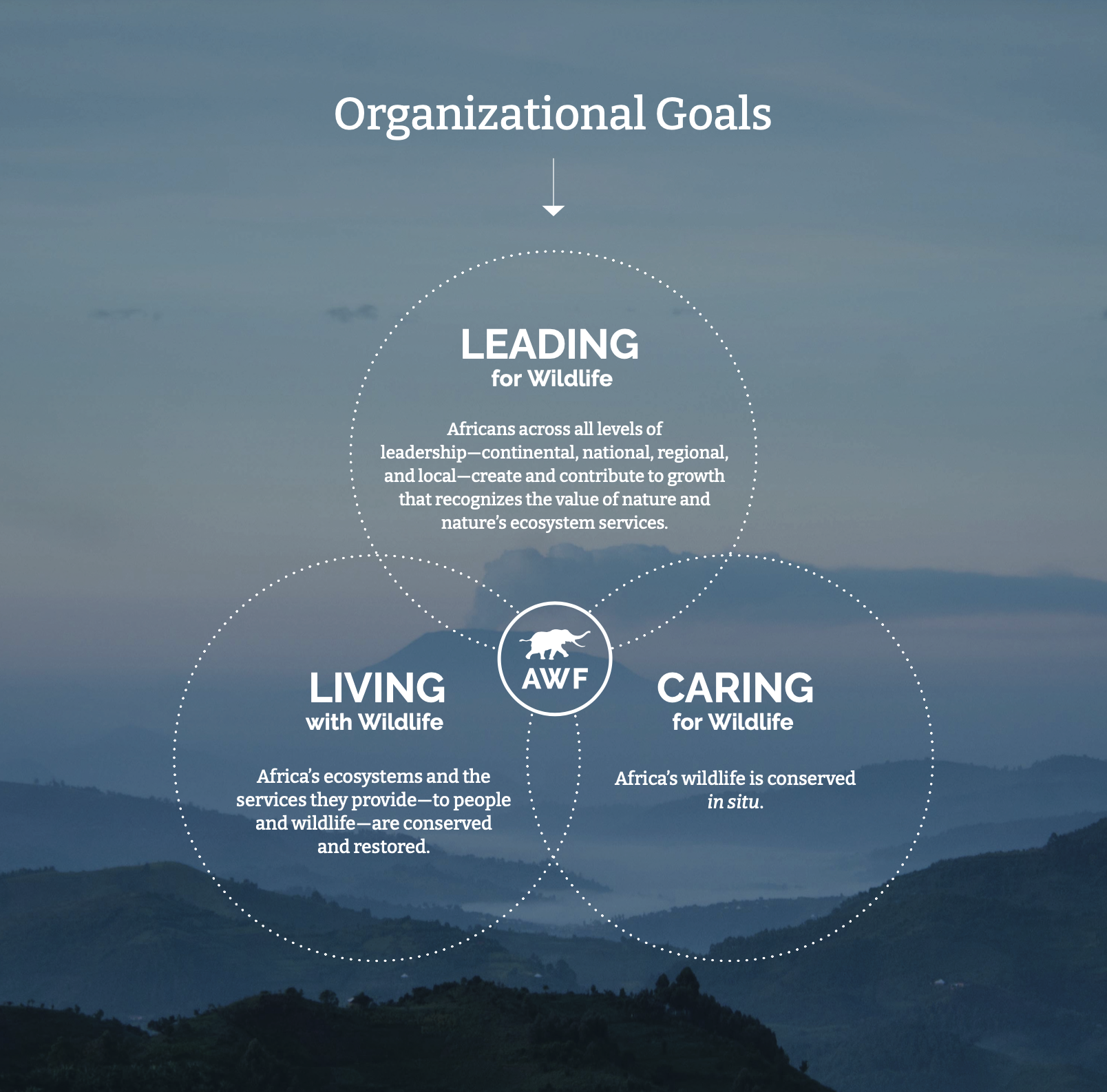
AWF drives transformative change in Africa by linking conservation to sustainable development using conservation strategies that leverage African ambitions for sustainable growth and deep cultural values for nature.
We emphasize African leadership—and responsibility—in making choices that protect our natural heritage. And we recognize the importance of partnership with a global community that shares our goal of building a future where people and wildlife thrive.
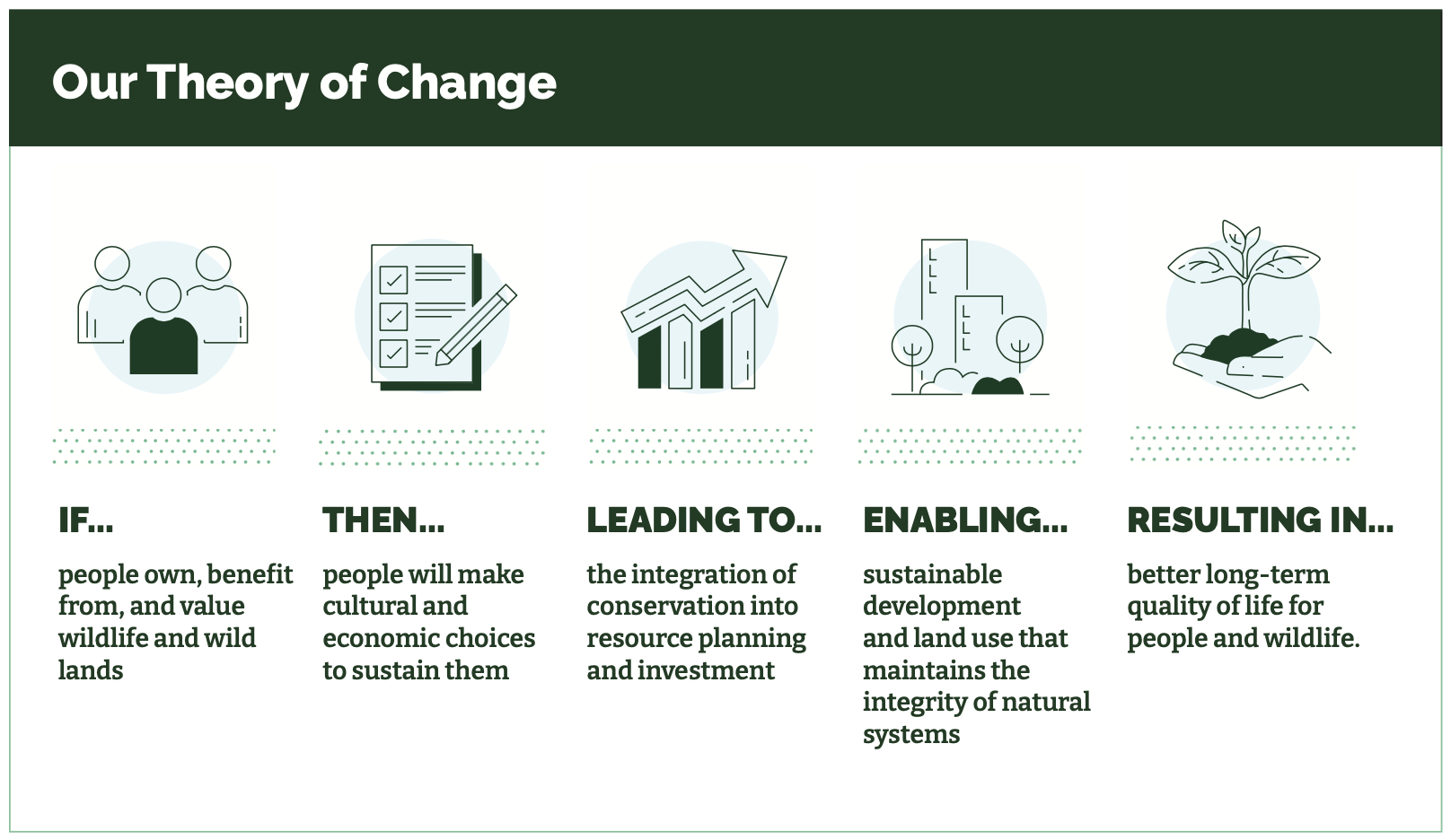
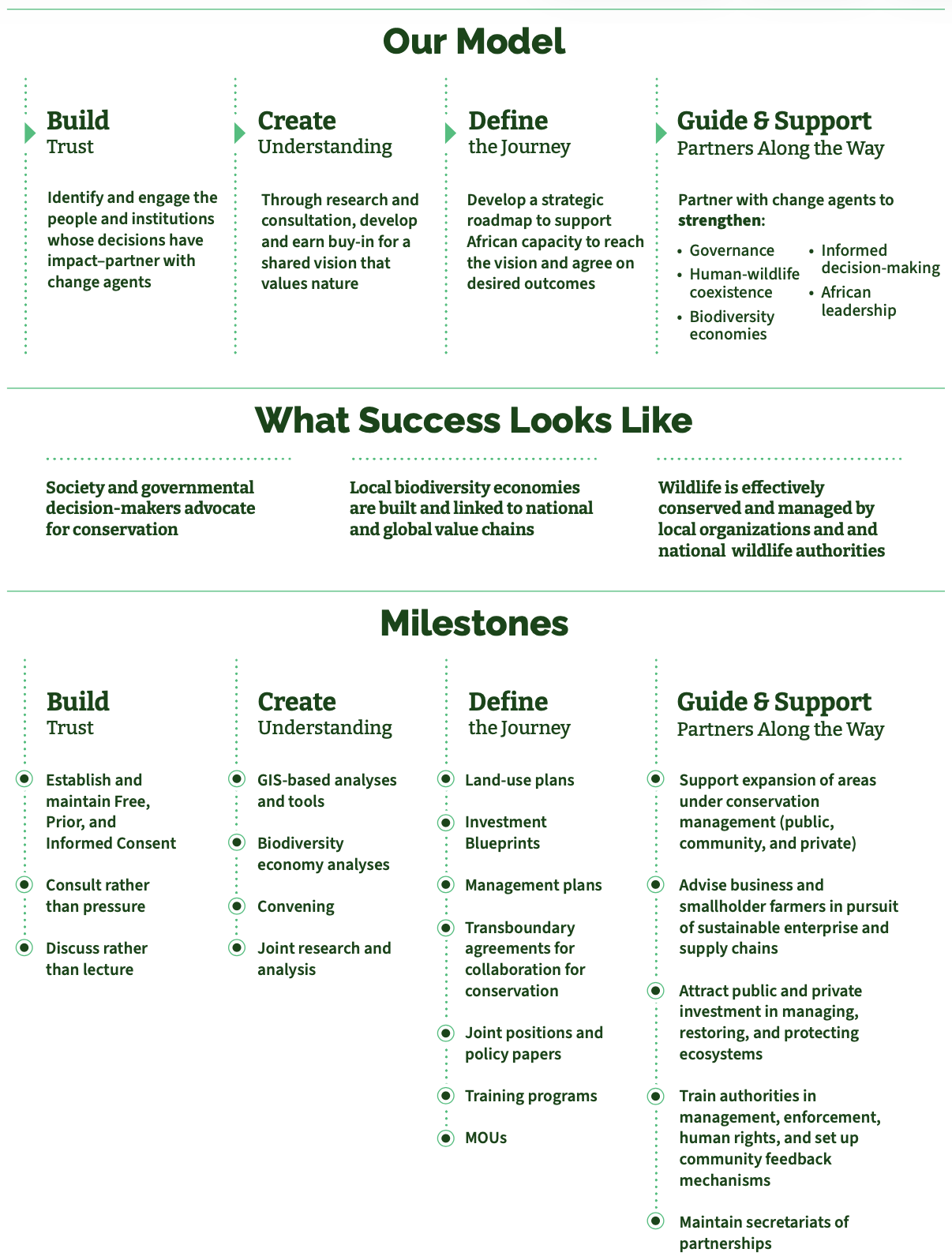
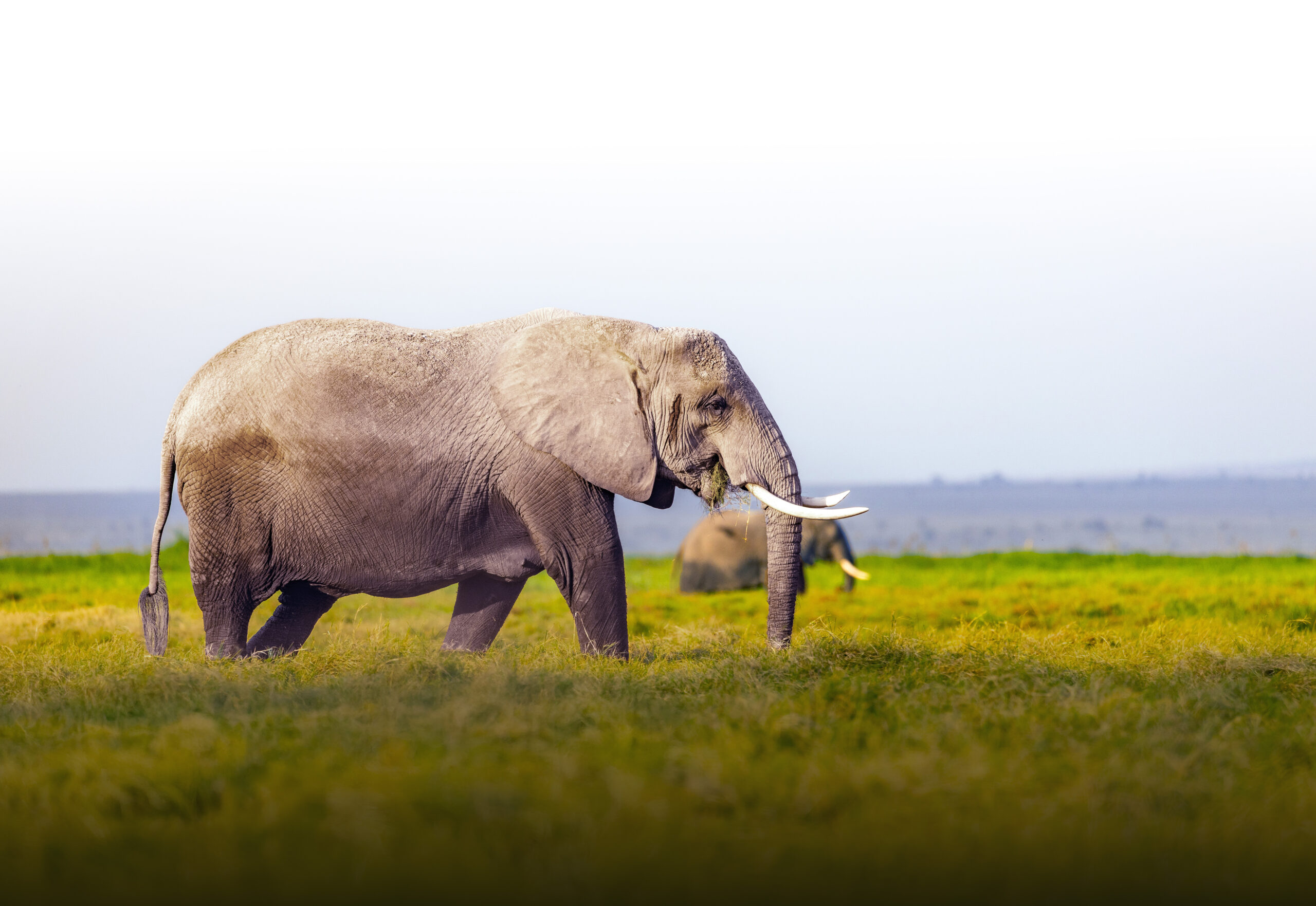
In partnership with the Government of Rwanda, the African Wildlife Foundation is continuing with an innovative model that positions ecosystem restoration as the driving force behind poverty alleviation and green growth. This is not conservation despite development, or development at the expense of nature. This is a rights-based approach that recognizes local communities as essential partners and the primary stewards of their natural heritage.
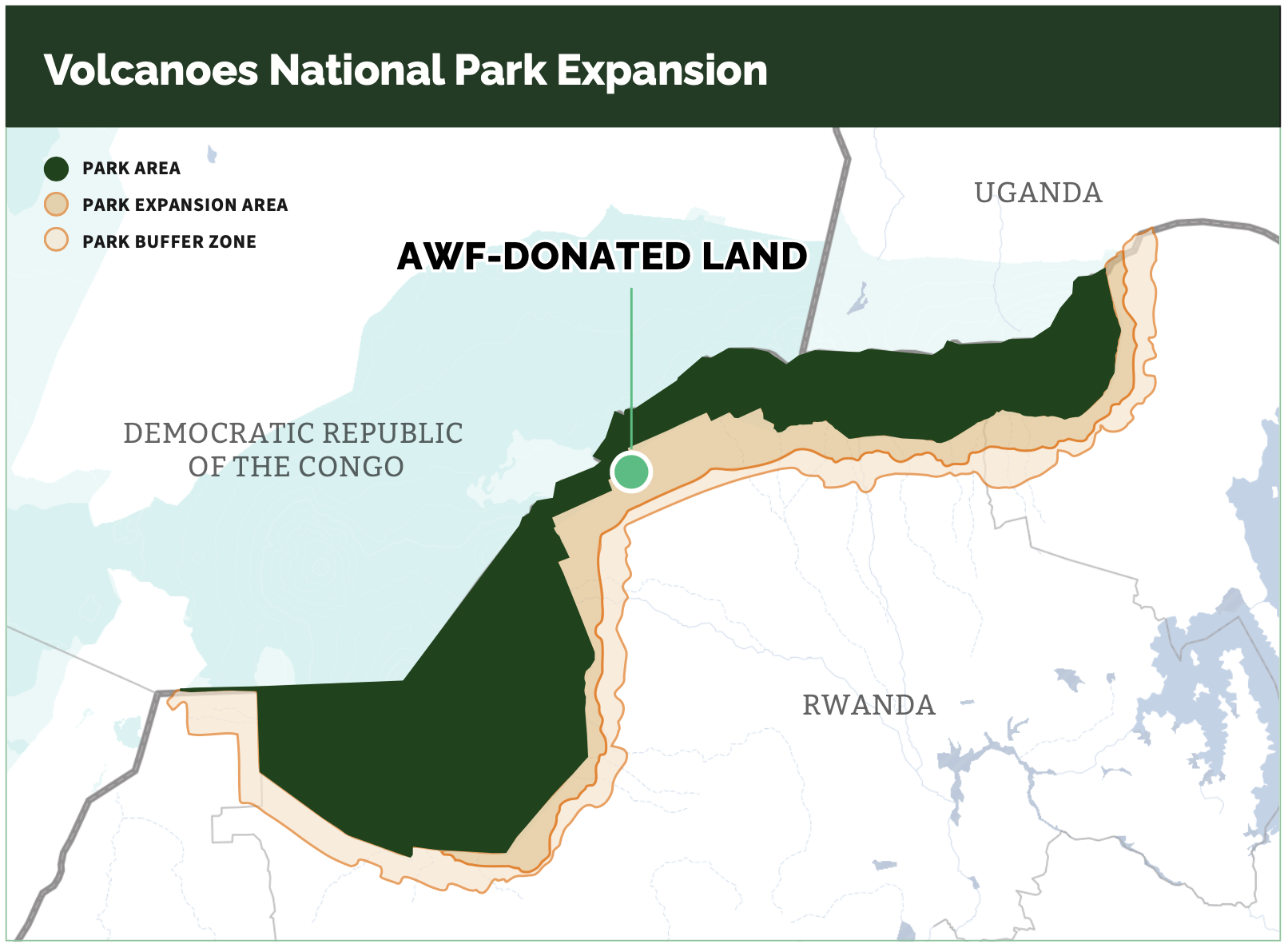
The comprehensive Conservation and Development Master Plan was completed in March 2024, providing a blueprint for how Rwanda can simultaneously expand gorilla habitat in Volcanoes National Park while creating a thriving biodiversity economy in the region. This year, gorillas began using 27 hectares of restored land AWF donated to Volcanoes National Park. A business incubation program, launched in partnership with Inkomoko, equips local entrepreneurs with the skills and capital to build conservation-compatible enterprises. And a newly established Volcanoes Community Association Horticulture Hub creates stable employment while demonstrating the economic viability of high-value agriculture.
These are not isolated projects—they are integrated components of a single, cohesive strategy.


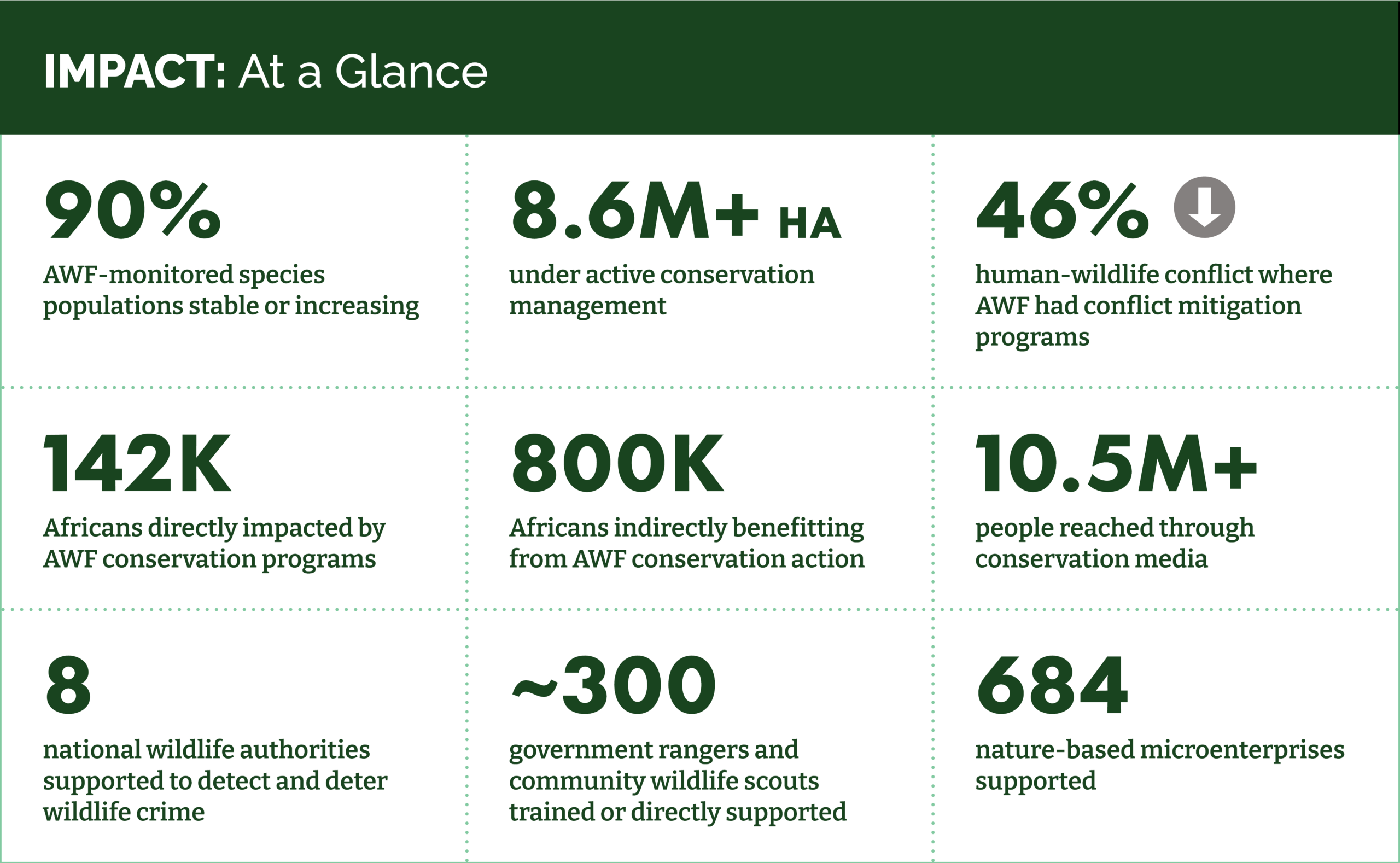
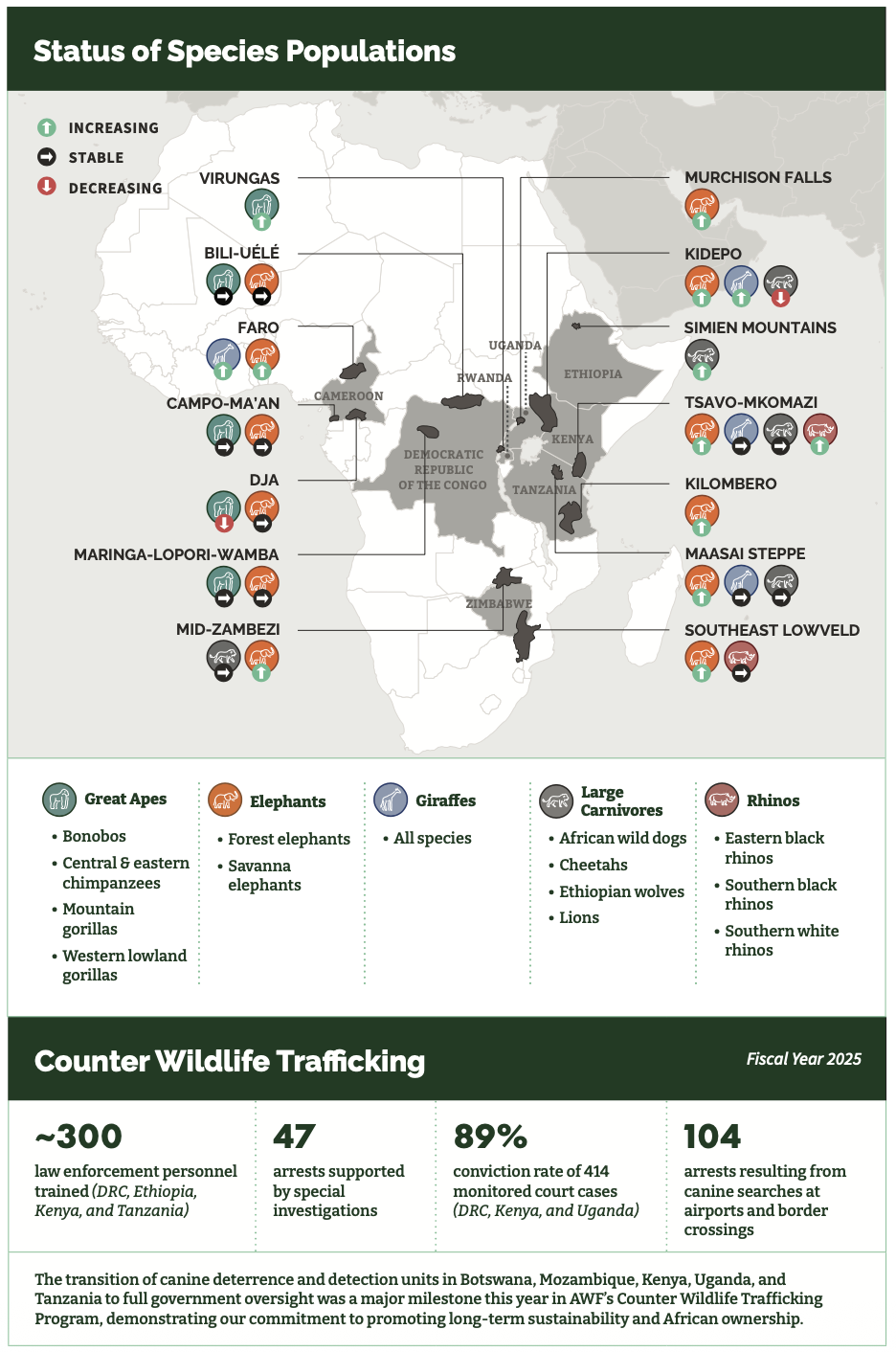
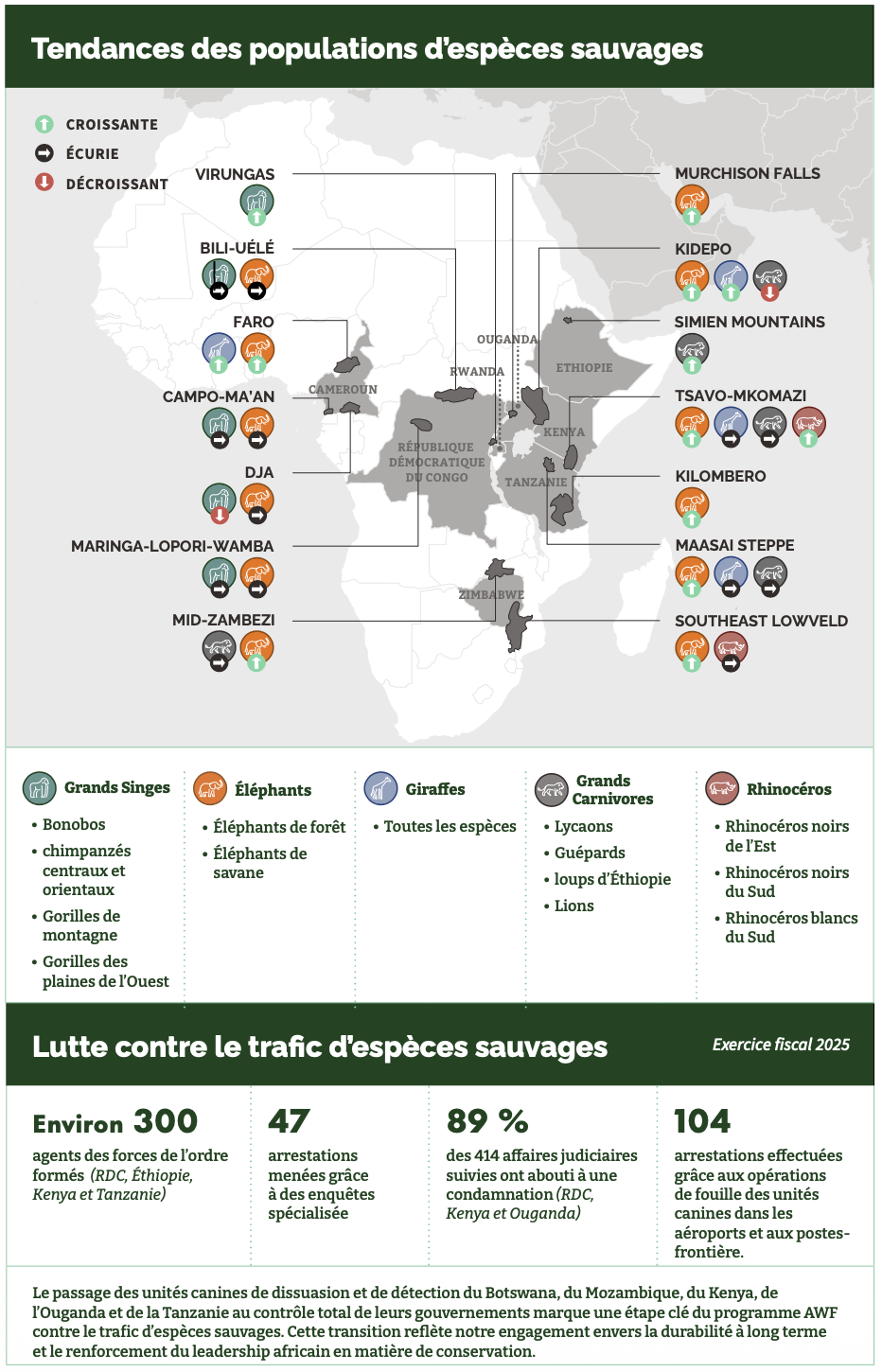
We monitored 41 populations of priority wildlife species, analyzing field and other data to determine threats facing each population. Specific populations were chosen because their viability provides good indications of overall ecosystem health and wildlife security.
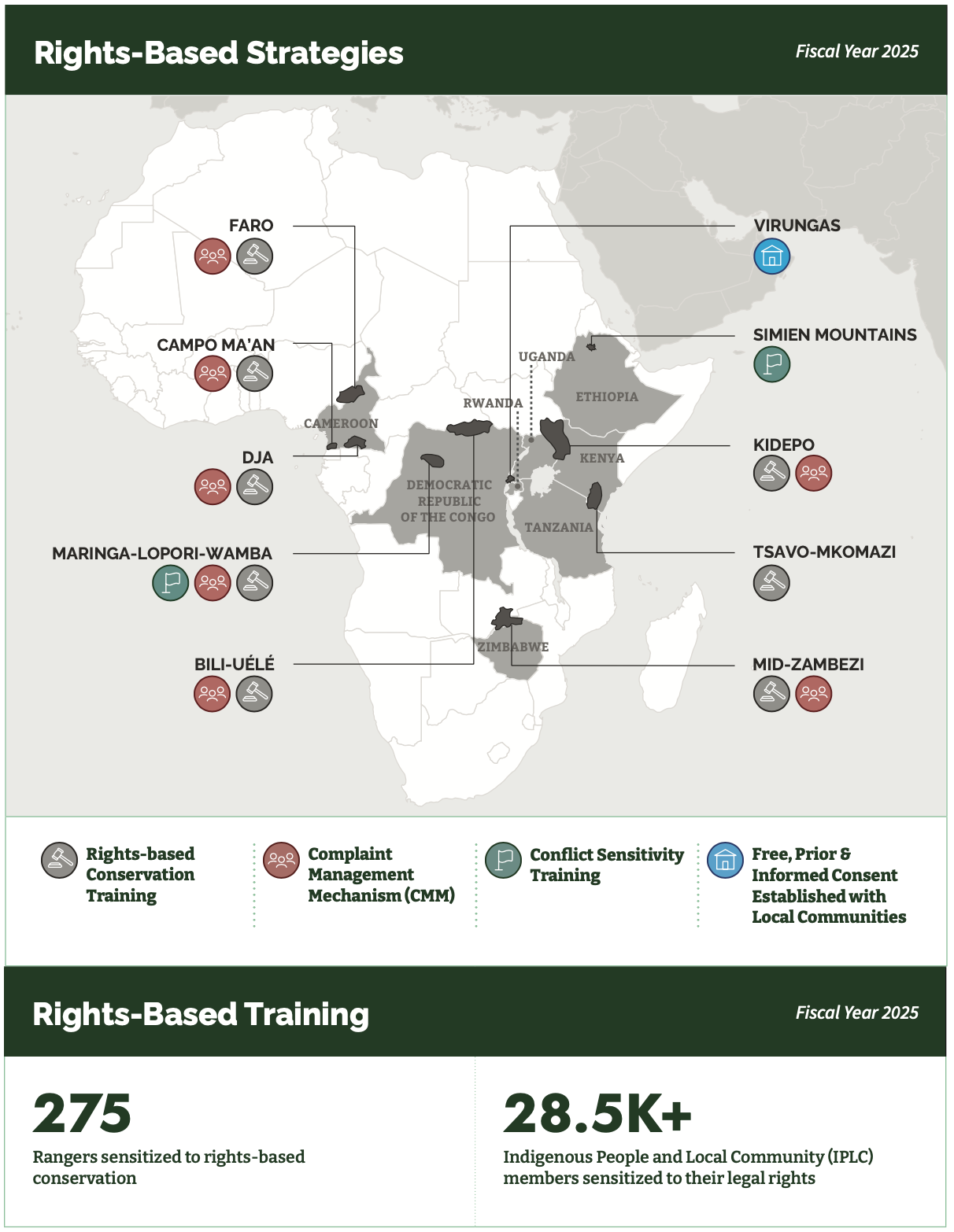
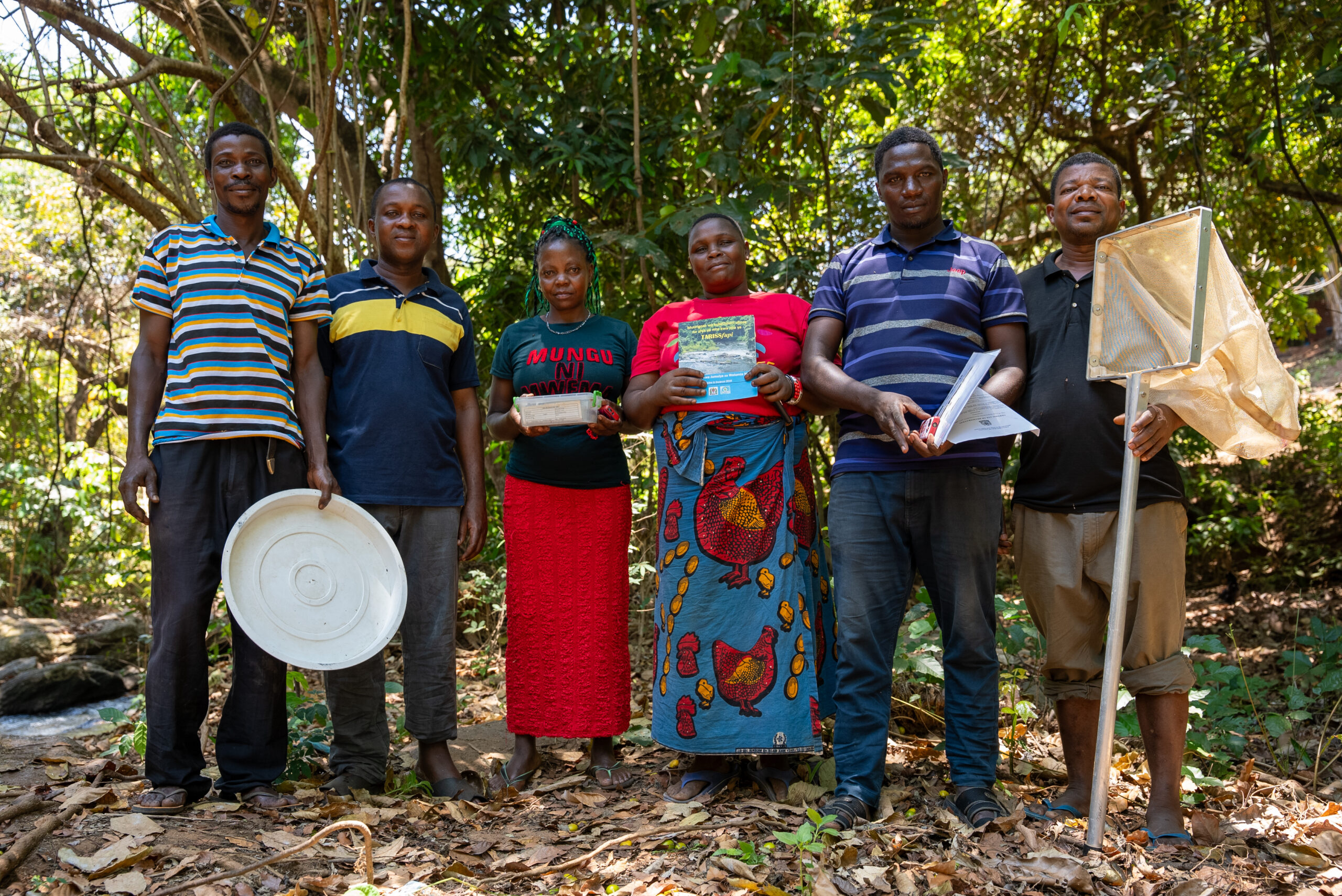
In addition to monitoring key species, we improved the capacity of law enforcement to detect, deter, investigate, and prosecute wildlife crime. We also supported effective wildlife management by providing on-the-ground training and resources for wildlife authorities and community scouts, helping to shape national wildlife policies.
In Ethiopia, we have provided technical and financial support to develop the first ever Walia Ibex National Recovery and Action Plan, working closely with the Ethiopian Wildlife Conservation Authority (EWCA) and stakeholders. We also supported the Uganda Wildlife Authority’s (UWA) giraffe assessment in Kidepo and advanced Uganda’s rhino reintroduction program by training rangers from the Kidepo and Murchison landscapes in rhino monitoring and management. In Kenya, we are current members of national committees for rhinos and elephants and consult on economic development strategies impacting wildlife corridors and ecosystem services, including formulation of the 2025 Wildlife Conservation and Management Act.
At a regional level, this year our scientists were part of the review panel for the IUCN’s Green Status Assessment of the Northern Lion (West and Central Africa).
The Conservation Geography team applies geospatial analysis to support planning, monitoring, and learning at local, regional, and national levels. This year, we expanded the use of powerful cloud-based processing in Google Earth Engine for vegetation trend and program impact evaluations, allowing us to leverage decades of satellite imagery. We also began an exploratory technical collaboration with the Allen Institute for Artificial Intelligence to test new approaches to land use and land cover mapping.
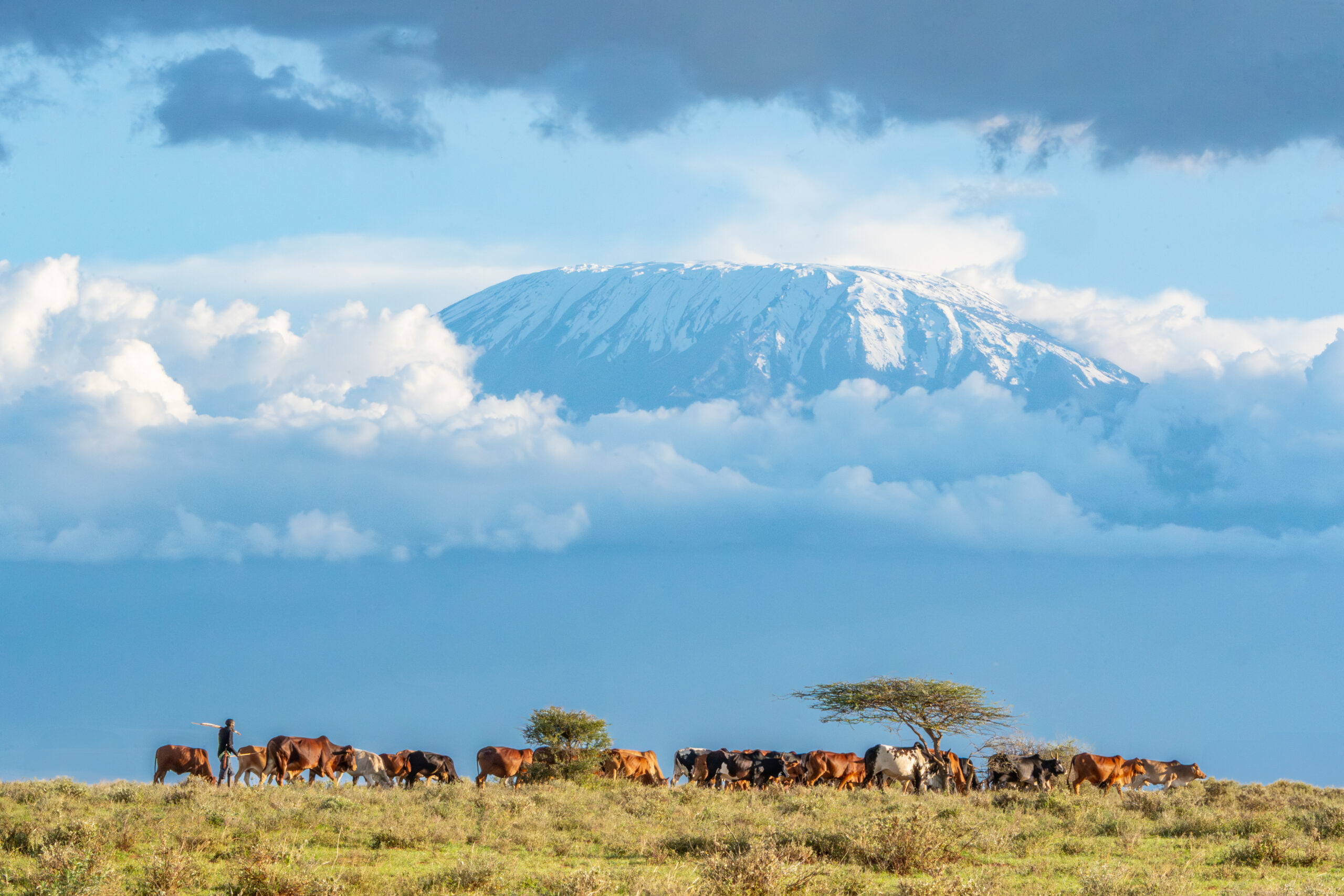
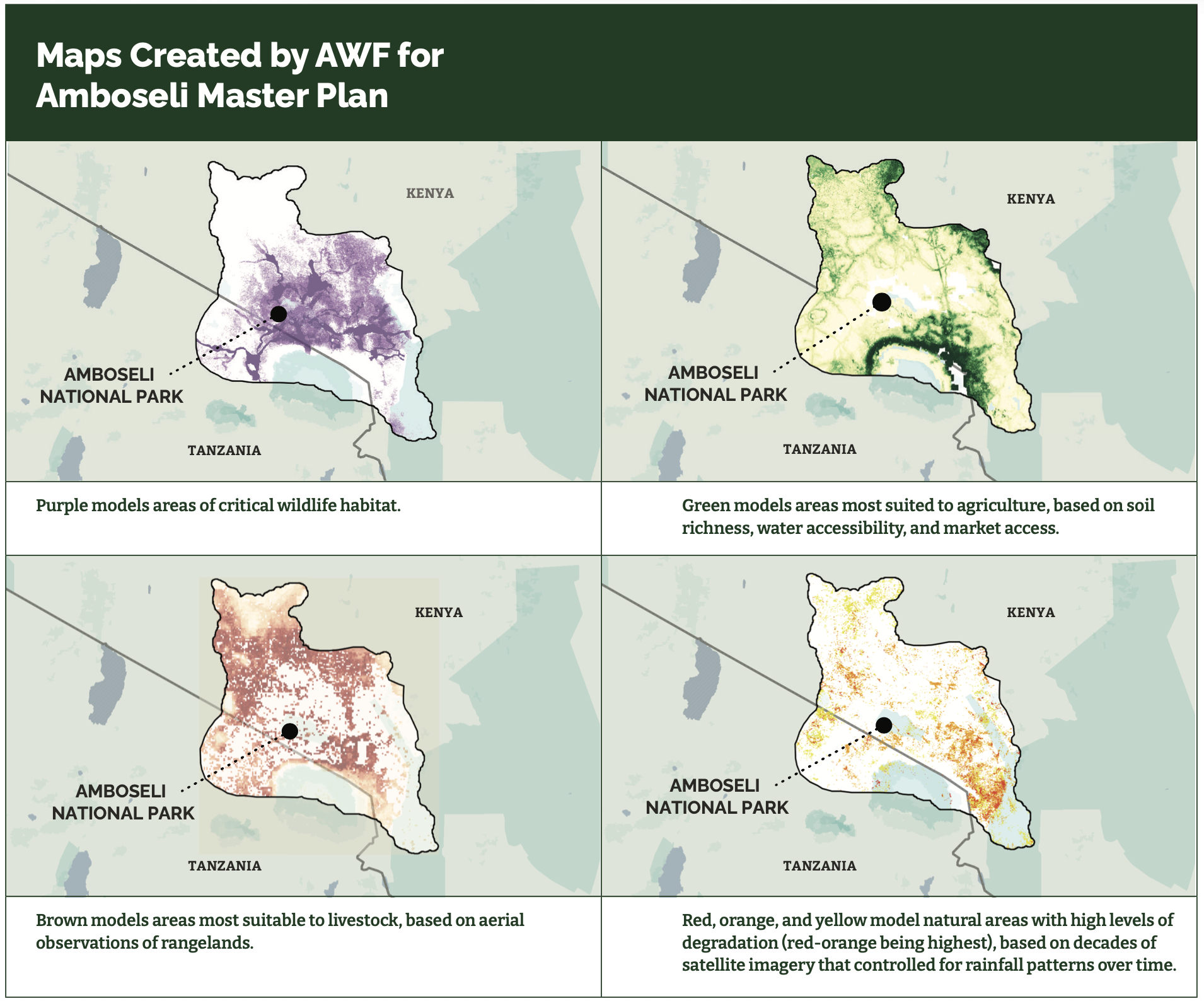
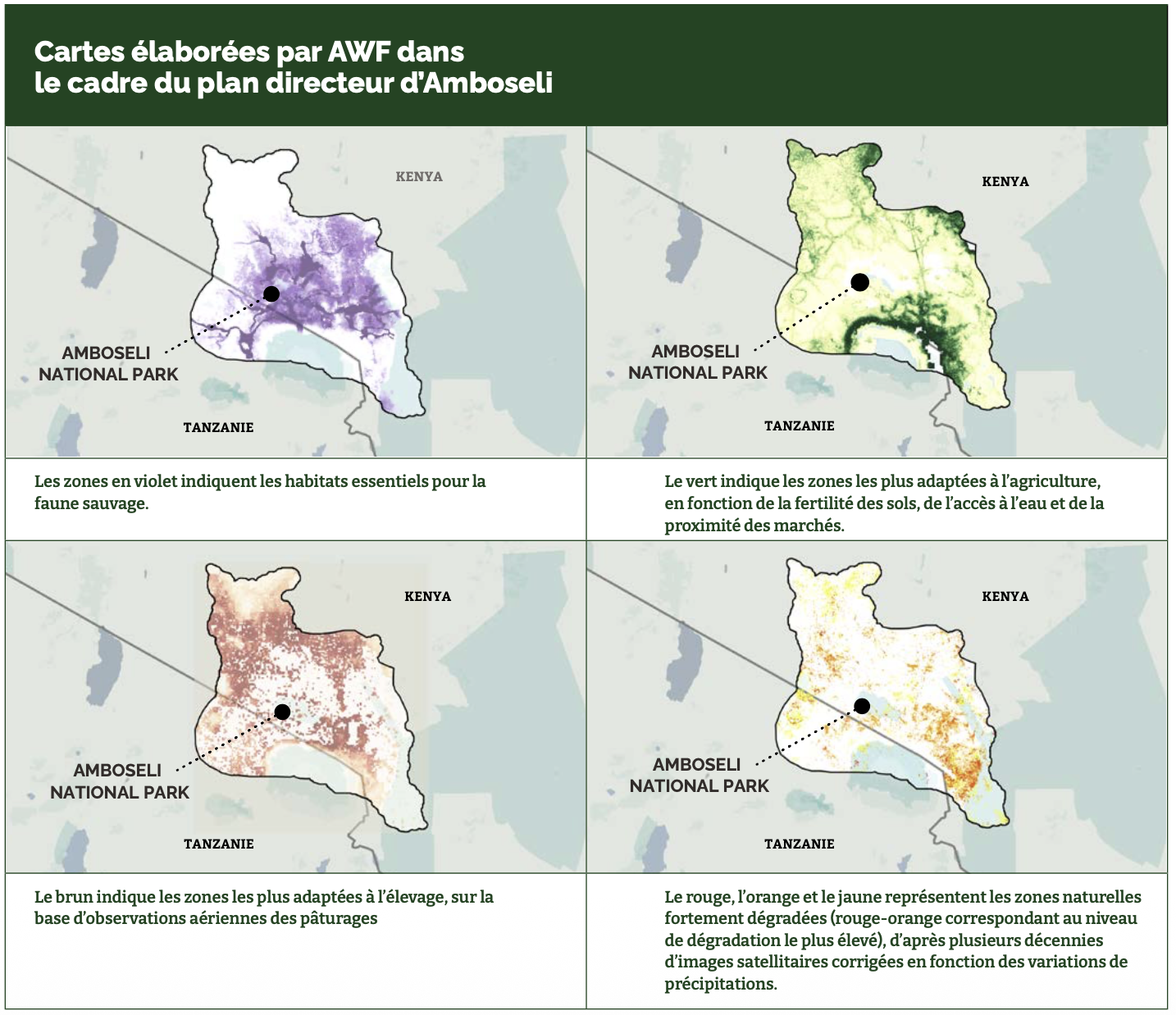
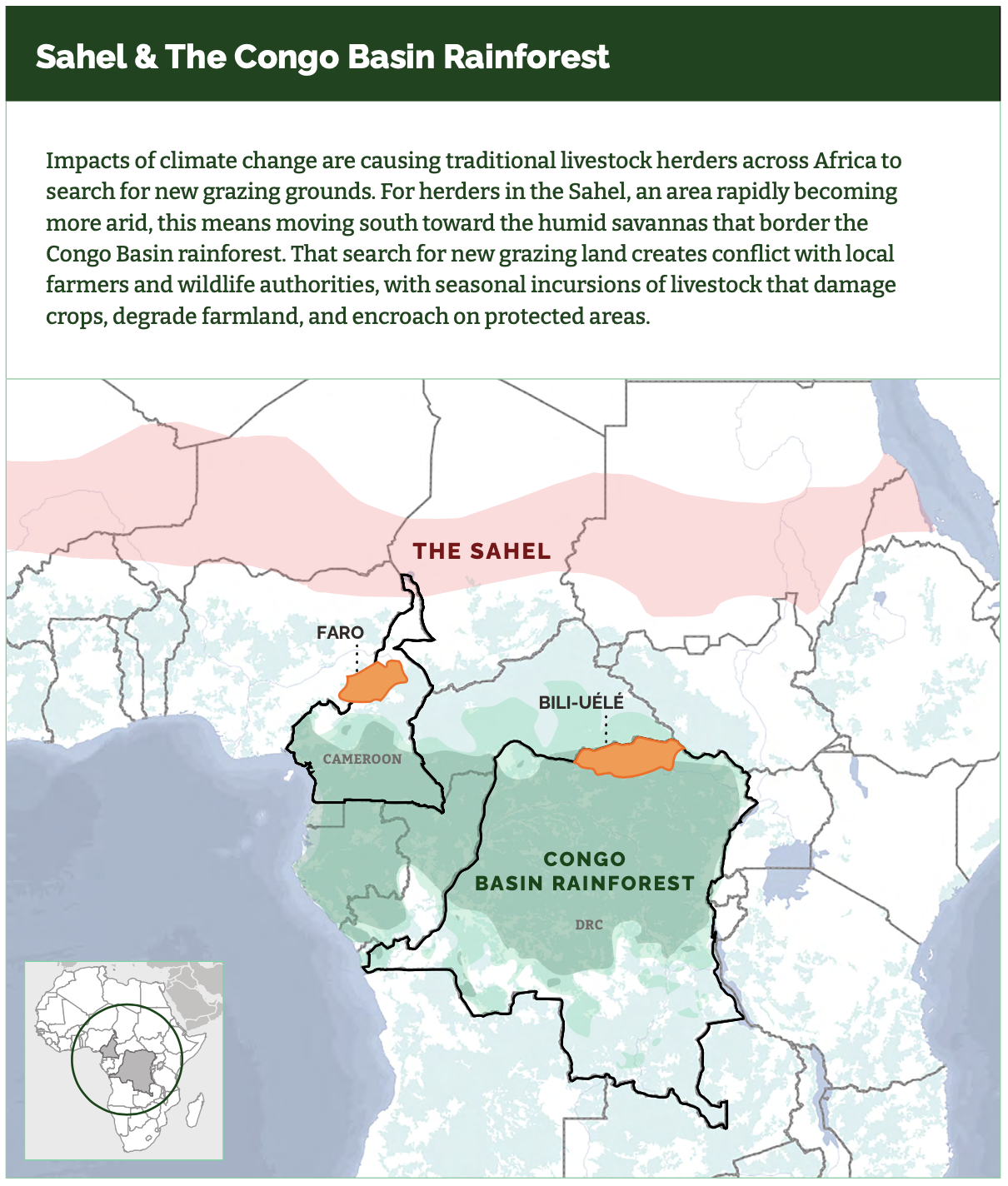
GIS analyses are informing a partnership with Kenya’s Kajiado County, which invited AWF to assist in creating a master plan for how the county can drive sustainable economic growth grounded in the Maasai community’s relationship with Amboseli National Park. As part of that plan, the team contributed stakeholder-informed spatial analyses of land use change, projected impacts, and models of tourism distribution. Additionally, we supported partner organizations in the landscape in onboarding and using GIS software. Work with wildlife authorities and other partners in the Faro (Cameroon) and Simien Mountains (Ethiopia) landscapes is leading to a more robust, consistent, and repeatable approach to spatial monitoring. And scenario modeling in Rwanda is helping the government make a case for a more sustainable green growth plan emphasizing wetland and forest protection towards enhanced water quality, flow, and climate resilience.
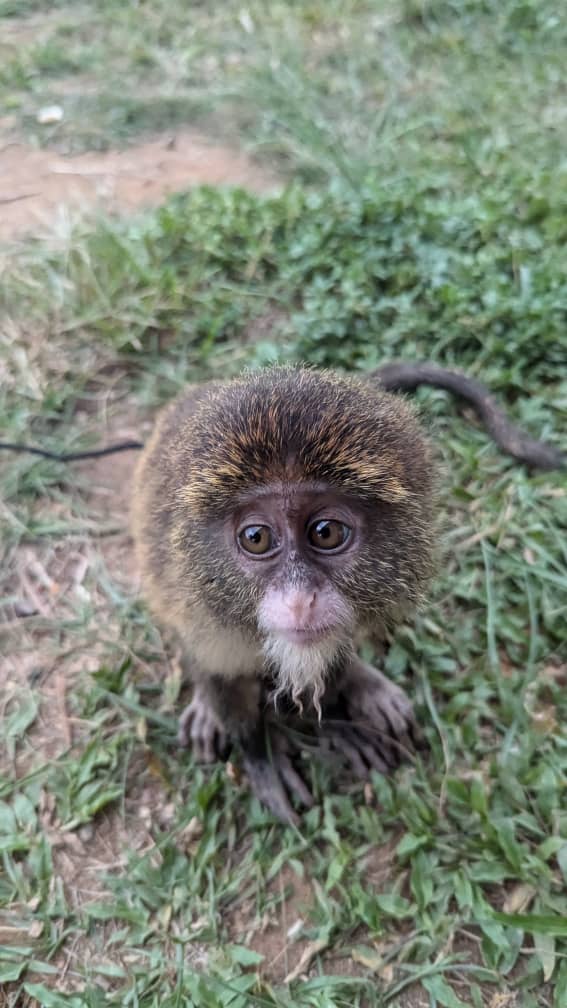
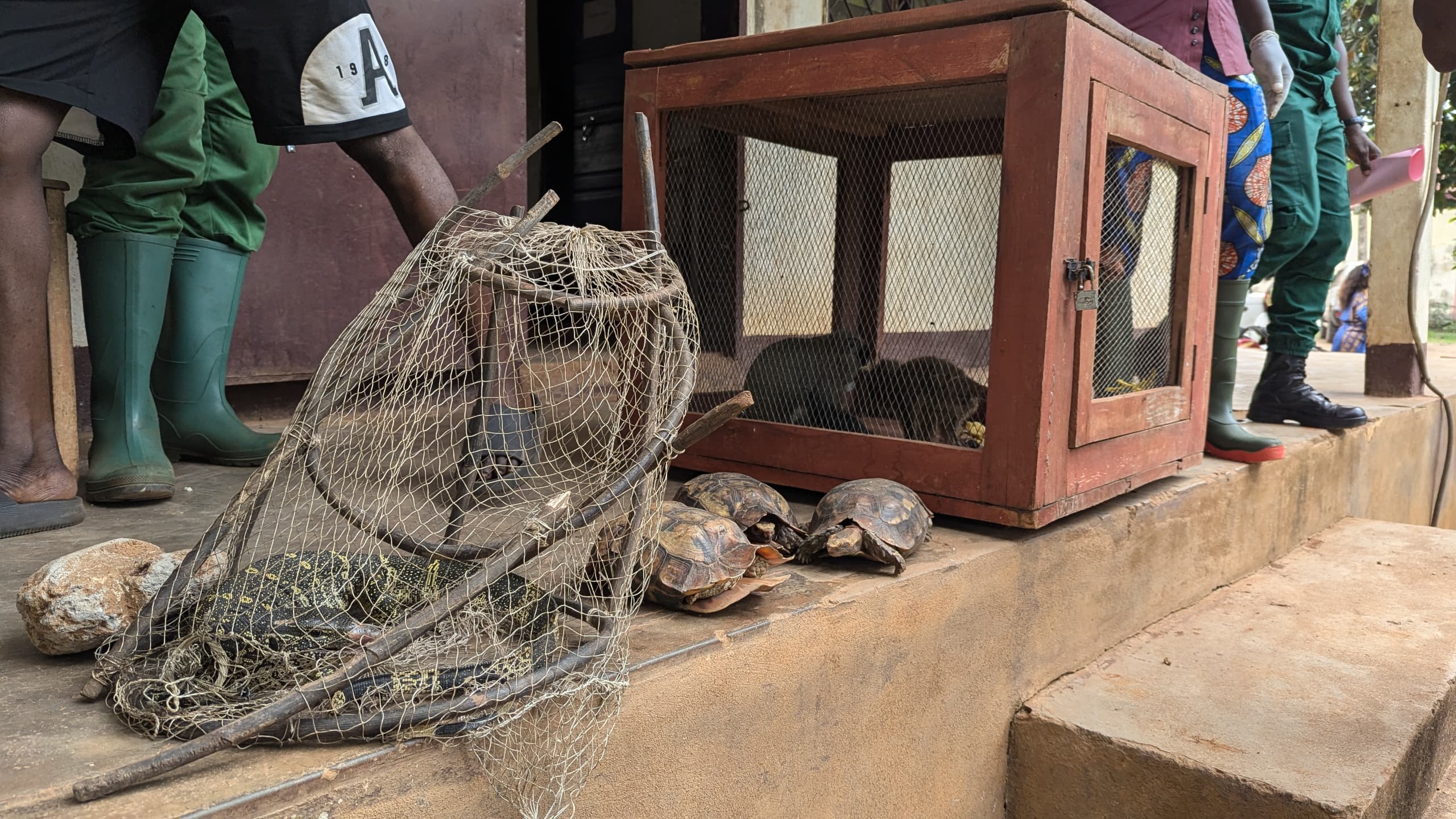
A lizard, two monkeys, and three tortoises—this isn’t the start of a fable, but a real rescue story from Cameroon’s Dja Faunal Reserve in March 2025, one of 29 rescues that took place in the landscape this year. The animals were recovered during an anti-poaching operation led by Cameroon’s wildlife authority (MINFOF) in partnership with AWF and with support from the European Union and UNESCO. They went on to receive care at Mvog-Betsi Zoo.





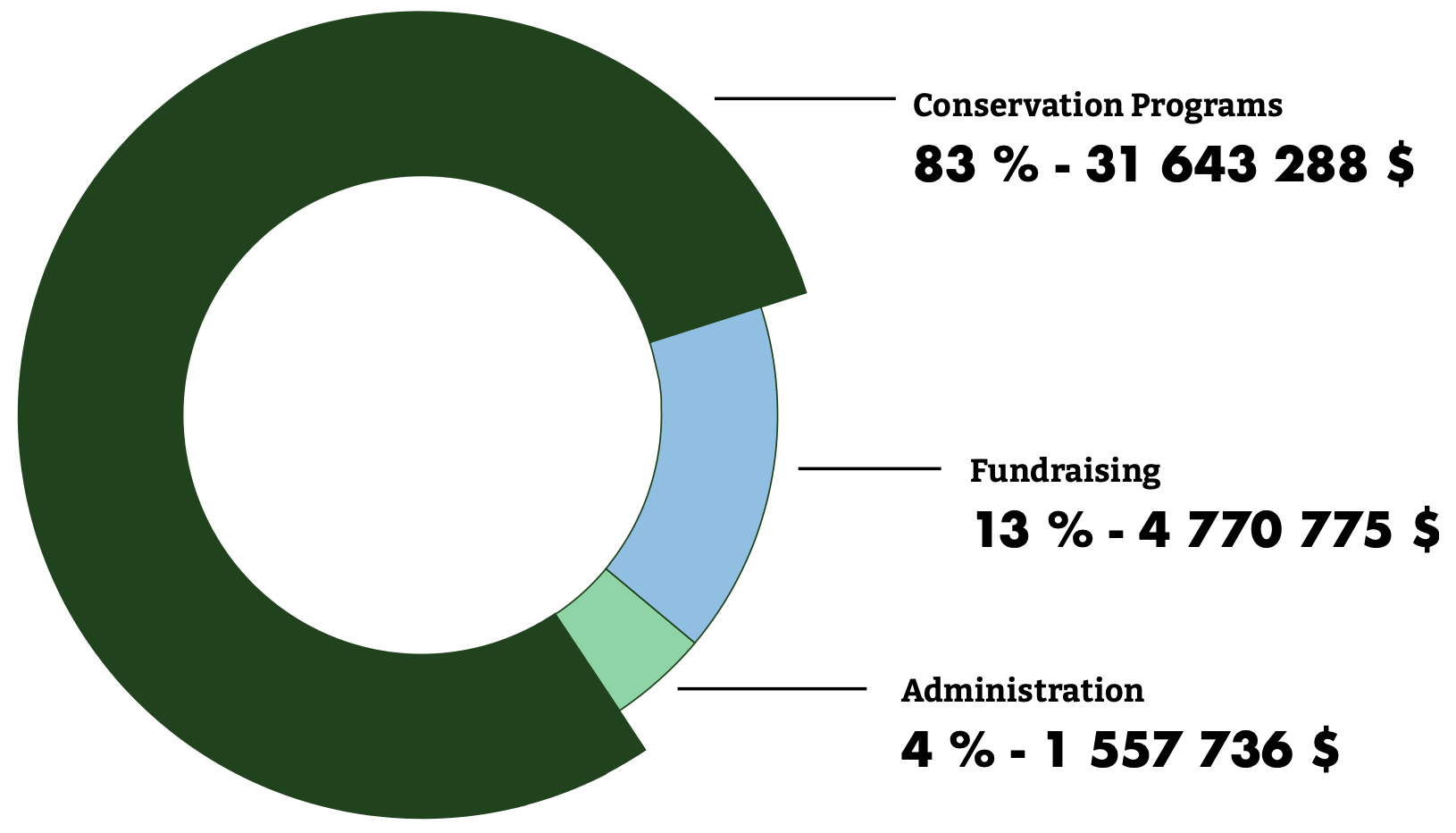
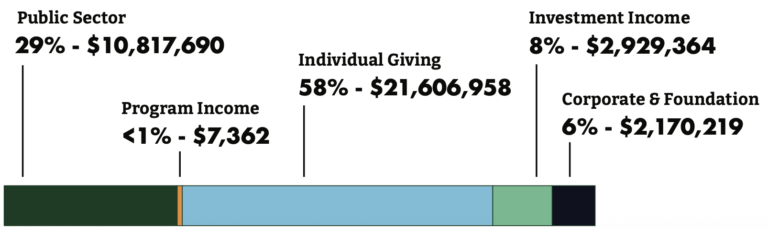
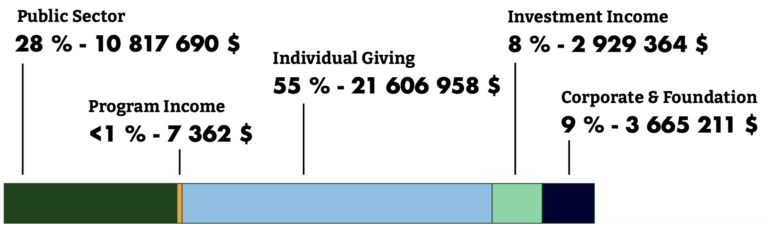
Since AWF’s beginnings over 60 years ago, we’ve been a responsible steward of your contributions in service to Africa’s wildlife and wild lands.
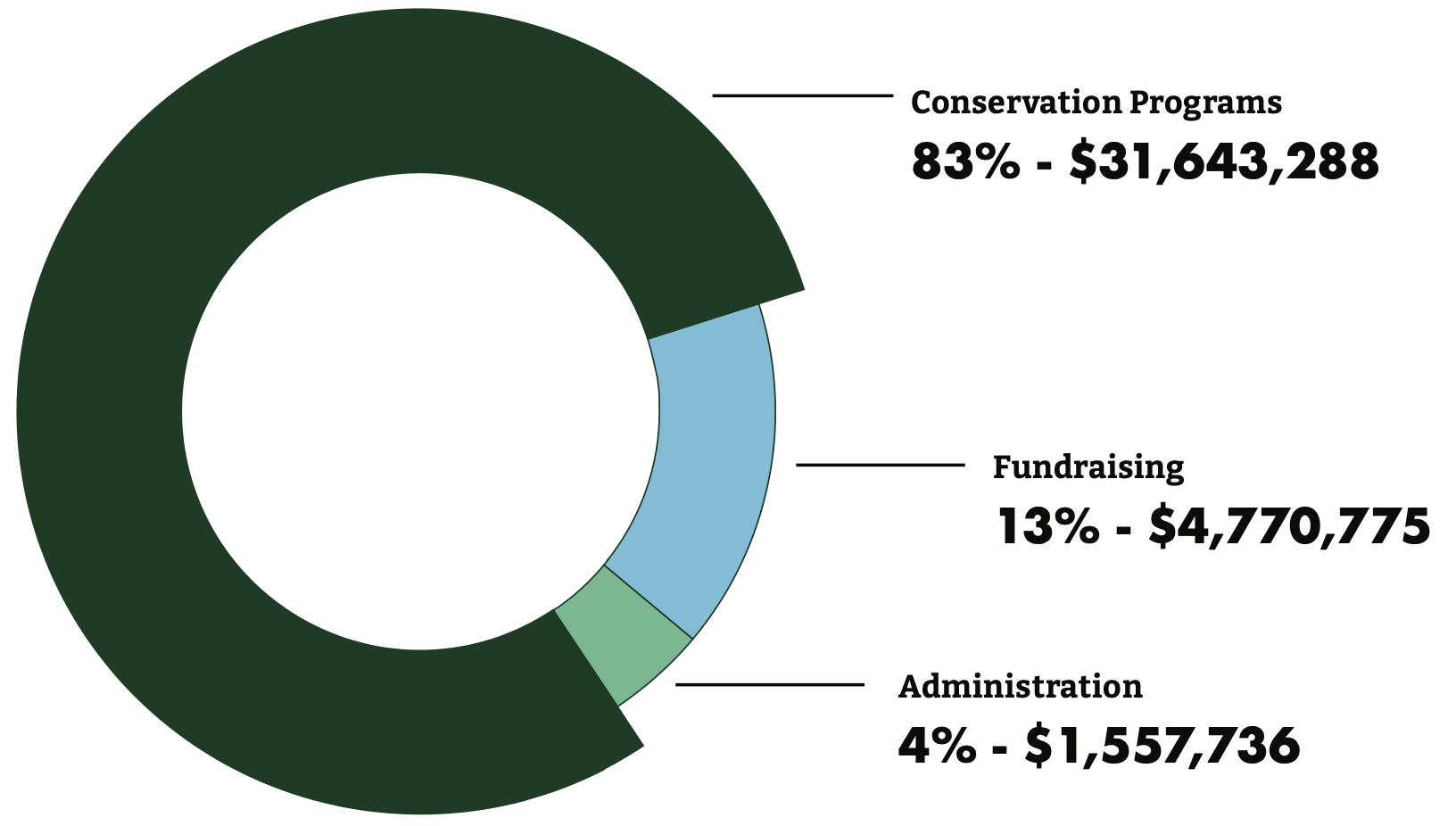
The African Wildlife Foundation is headquartered in Nairobi, Kenya, a registered 501(c)(3) organization in the United States and a registered charity in the United Kingdom and Canada. Within the limits of law, your gift is tax-deductible to the fullest extent possible. For tax purposes, our EIN is 52-0781390.
All photography is credited to AWF unless listed otherwise.